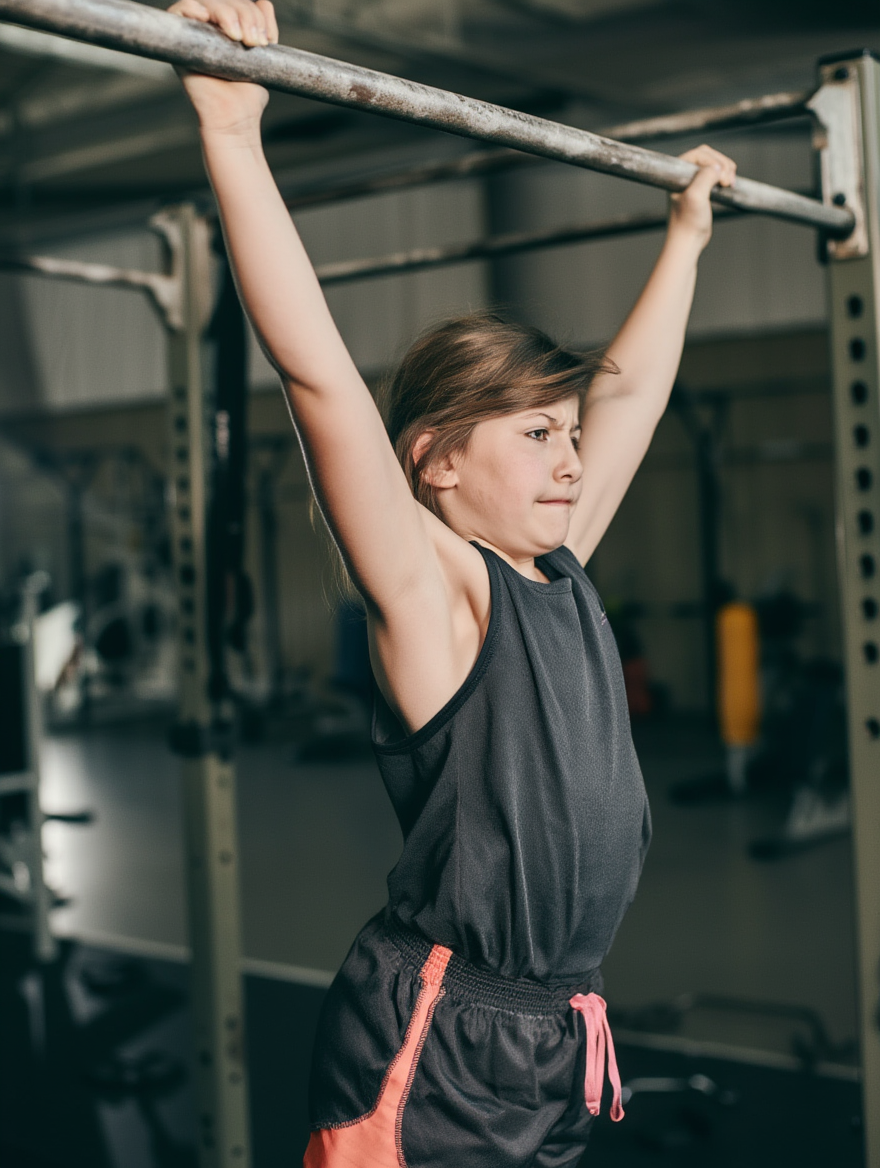
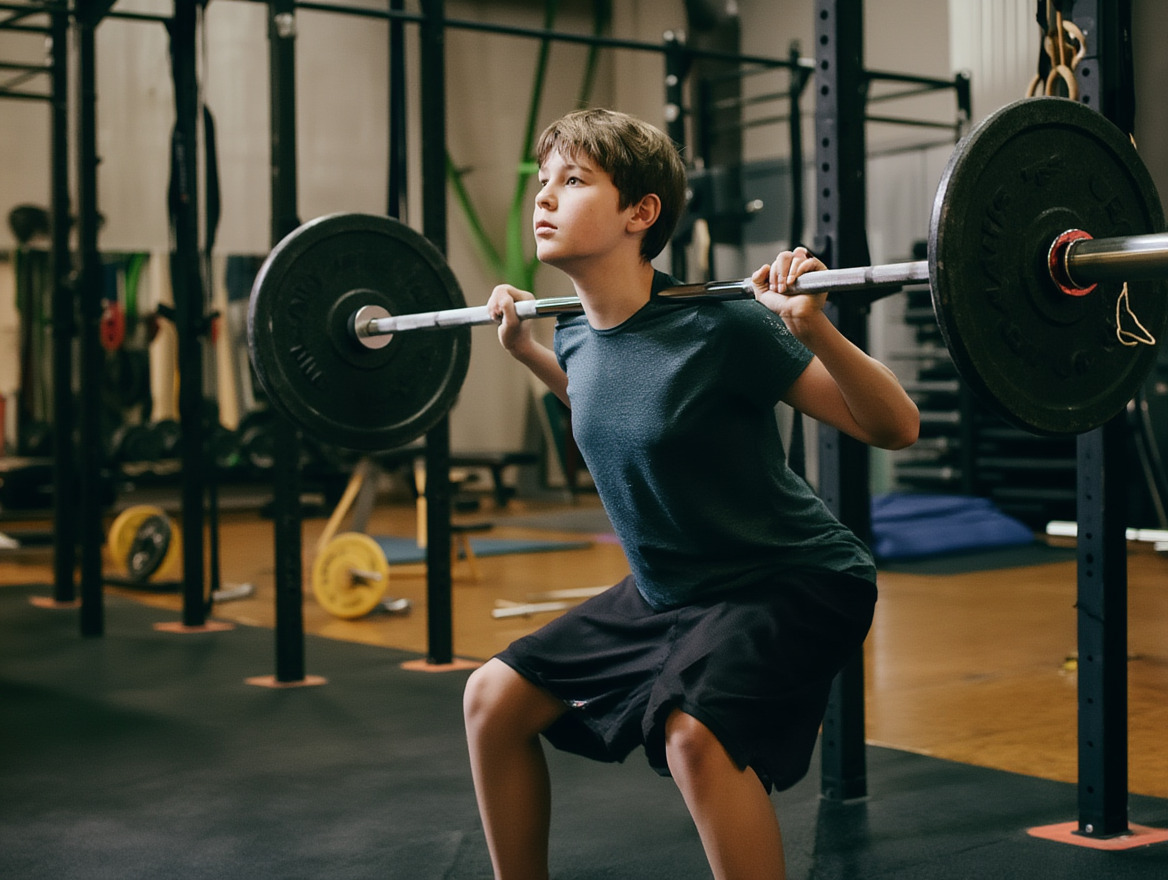
Every few years someone’s parent pulls their kid from a training program because they heard strength training closes growth plates. The coach nods politely. The kid goes back to being untrained. Nothing changes.
Where the myth came from
This myth traces back to a single report published in 1964 by researchers Kato and Ishiko, who observed that children performing heavy manual labour in remote mountainous villages in Japan were notably short in stature. From that observation, someone made a leap. The assumption became that the physical load was responsible for their reduced stature, and from there, the idea calcified into conventional wisdom: lifting weights damages growth plates, stunts growth, and is dangerous for children.
What the original report failed to account for was that those same children were living on a poor diet. They weren’t short because they were loading their bodies. They were short because they were malnourished while loading their bodies – for hours a day, with no recovery and no nutritional support to rebuild what that load was breaking down. Sustained compressive work without adequate nutrition to reinforce it will reduce stature. That’s not a training story. That’s a deprivation story.
The scientists found only a correlation between physical load and short stature. The major cause was that these children were underfed. Had those same children been eating properly, the evidence suggests they would have been physical standouts – not stunted ones.
What the leading bodies actually say
The American Academy of Pediatrics and the National Strength and Conditioning Association (NSCA) both state that resistance training, when performed under appropriate supervision and with proper technique, is a safe and beneficial activity for young athletes.
The American College of Sports Medicine has been equally direct: no scientific evidence indicates that participation in a well-designed youth resistance training program will stunt the growth of children or harm their developing skeleton. In fact, childhood appears to be the best time to participate in strength-building activities that enhance bone mineral content and density. The NSCA is the leading professional body for strength and conditioning science globally. Their position, like that of the American Academy of Pediatrics, is unambiguous.
What the injury data shows
Here’s the part that should make every sports parent pause. Research on young athletes has found that resistance training reduced sports-related injuries – both overuse and acute – by up to 66 percent. For young female athletes, who face elevated risk of certain knee and ligament injuries, structured strength programs have cut injury rates by as much as 68 percent.
The fear around strength training is aimed at the controlled environment. The uncontrolled one gets a pass. A child who plays four games and three training sessions in a single week – sprinting, cutting, jumping, and landing at high speed through ten-plus hours of organised sport – encounters far greater forces through her developing joints than she would in a supervised bodyweight session. Training the patterns that exist in those exact sport movements, two to three times a week, builds the capacity that makes all of it safer.
The backwards logic of the standard
Yet here is what actually happens in practice. A parent pulls their daughter from a strength program because they’ve heard it’s risky. That same week, she plays four games, attends three training sessions, and sprints, cuts, jumps, and lands at high speed through ten-plus hours of organised sport. No one questions that. The forces going through her developing joints during a single hard cut on a soccer field or a landing off a volleyball spike dwarf anything she’d encounter in a supervised bodyweight session. But training the patterns that exist in those exact sport movements – two to three times a week, building capacity in a controlled and progressive way – will have a dramatic impact on her resilience and readiness for all of it.
The fear is aimed at the controlled environment. The uncontrolled one gets a pass. That’s not a fringe concern. It’s the standard. And it’s backwards.
See how R1 approaches the Body domain.
Strength, movement quality, and physical readiness are one of three pillars in the R1 ReadyFirst framework. See how it works.